




























































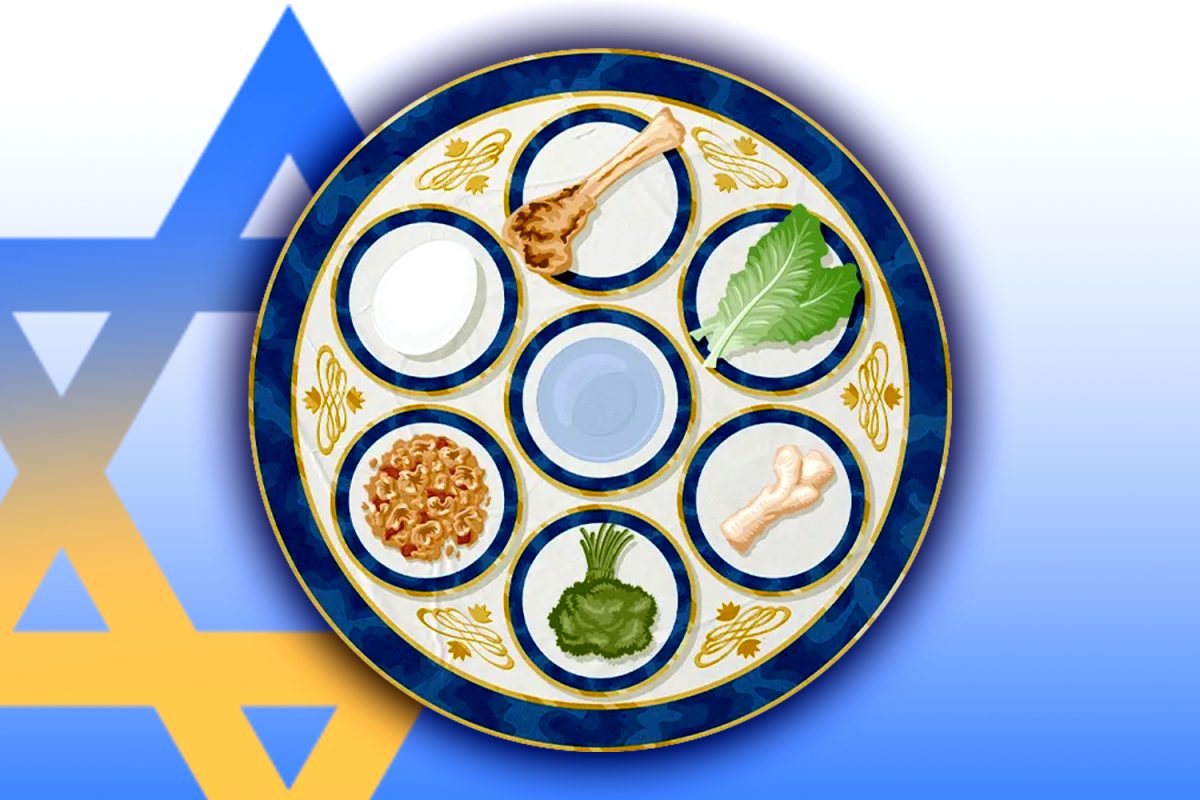
Starting April 1 at sundown, Jewish people gather with their friends and families to honor and celebrate the Exodus of the Israelites from slavery in Egypt.
The holiday begins on the 15th day of the Hebrew month Nisan and lasts seven days in Israel and eight in the diaspora.
The principal ritual is the Seder, a traditional meal, even though the highlight of the night for many children may be searching for the afikomen, a piece of matzo.
The seder consists of a meal with 14 steps. Jewish people refrain from eating leavened products (chametz) and eat unleavened bread (matzah).
Religious celebrations are unique experiences for every family shaped by their religious identity, reflected in their different traditions during the seder.
Sophomore Amelie Barnett spends the celebration with her family or anyone in the area. When they hide the afikoman, the youngest child searches for it and receives $15-20 to spend. Her favorite part is saying the prayers with her family, especially since her dad likes to add some comedy, which helps with the merriment.
Barnett views the holiday as a way to understand the struggles that Jewish people have experienced as slaves. Her father and grandma take turns every year, alternating in saying the prayers.
“It’s so important to understand our ancestors’ struggles, even though it can take a while; it’s a great experience. Even though I don’t know Hebrew, it feels great to celebrate and honor such an important culture. I believe it allows the person to be more in touch with their religion and have a special relationship with God,” says Barnett.
Passover has a different significance for every Jewish person. Darrin Shwartz, the AICE Global Perspectives and AICE Media Studies teacher, has his own way of celebrating the meaningful holiday.
Mostly, his family attends, but sometimes his close friends come and spend it with him. Respectfully, he describes it as quite messy, with everyone attempting to get on the same page and organize themselves and to stop speaking over each other during the Haggadah.
Flexibility is key to Schwartz: keeping things traditional while also allowing room to pause and explain, tell stories, and even get slightly distracted.
Passover for him is a time to reflect on resilience, a tradition where he can sit back and think about his roots and be reminded of who he truly is. It is vital to slow down and reflect, especially during the hard moments that the whole world is experiencing.
Schwartz explains, “When I was younger, it felt hours long. Now, I appreciate the meaning behind Passover a lot more: the storytelling and the connection to history. And, of course, I still check how close we are to eating. One eye is always on the brisket. That is something that has not changed over time.”
He continues, “I think [the Seder] goes beyond remembering history. It is about experiencing it together, with family, passing it on from generation to generation. Plus, it’s one of those rare moments where everything and everyone slows down; we have the opportunity to sit together and share something that actually matters.”
Passover, which ends on the ninth of April, continues to bring family and friends together to celebrate their ancestors’ courage and resilience.
By telling stories, reflecting, and bonding, the seder remains a powerful way for Jewish people to connect with their history and each other.
Faran Fagen, who teaches Journalism One, AICE Media Studies, and sponsors the CHAT Newspaper, comments, “Passover connects us to our own family history of migration and overcoming hardship. It also—hopefully—teaches my children the importance of standing up for others who are oppressed.”