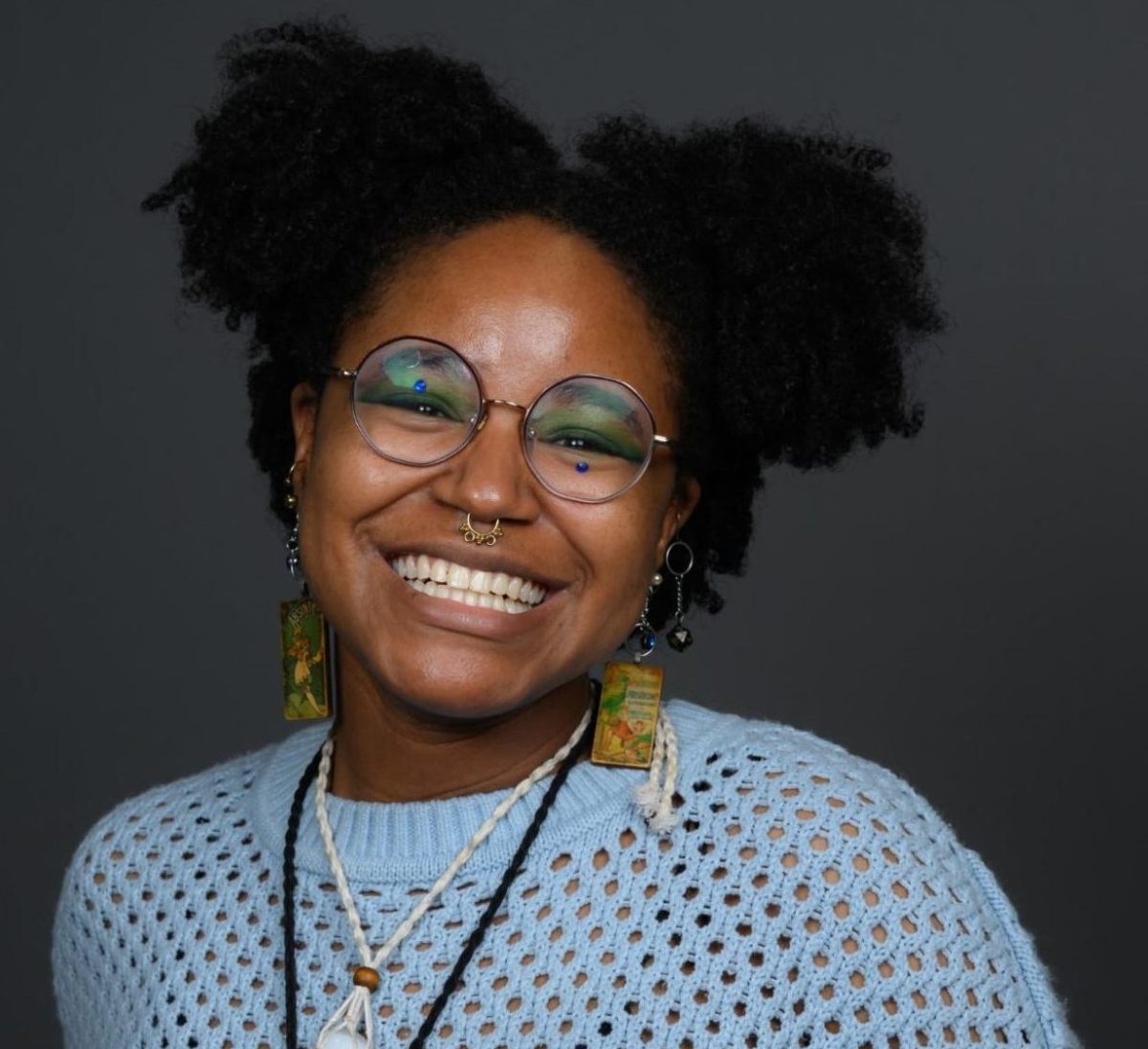

The screen buffers, the camera shuts on, and with the click of a button, alumna Camilla Penso is talking with doctors in Bogota, Colombia, a place more than 1500 miles away from her cozy desk in Miami, Florida.
In Spanish, she listens to stories of patients who travel far for basic care; in English, she helps shape a telehealth plan that could bring those visits a little closer to home.
What transcends both languages is her passion to “pass” care forward, treating the care she once received in the United States as a gift to be shared worldwide.
As young as 10 years old, Penso migrated from Venezuela to the U.S. with her brother and parents. They all learned English as a second language, but Penso learned more than just English; she began to understand the conventions of the medical world.
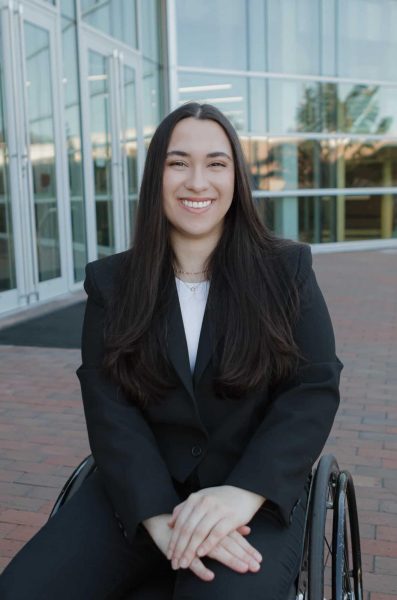
“I had to translate in my doctor’s appointments and things like that,” says Penso, who was seeing care for her condition, Cerebral Palsy (CP).
She went through three surgeries, then months of physical therapy, learning step by step how to reconnect her brain and muscles.
“It was very different for me because the doctors were very straight up,” but eventually, Penso wrapped her mind around their medical jargon and found a knack for medicine.
As she grew older, that idea started to look more like a career. On her way to graduating in 2019, Penso had begun building experience in the health field, joining HOSA (Health Occupations Students of America).
“I was part of HOSA. [Lourdes] Ramirez was the club head. We went to conferences and competitions. I still talk to her to this day.”
The organization gave her an early taste of health care. She competed in regional events at schools like Western in Davie, completing projects and skill-based competitions that pushed her to think like a future clinician.
After Charter, she finished her undergraduate degree at Broward College, pivoting to the University of Central Florida for her bachelor of science in health sciences.
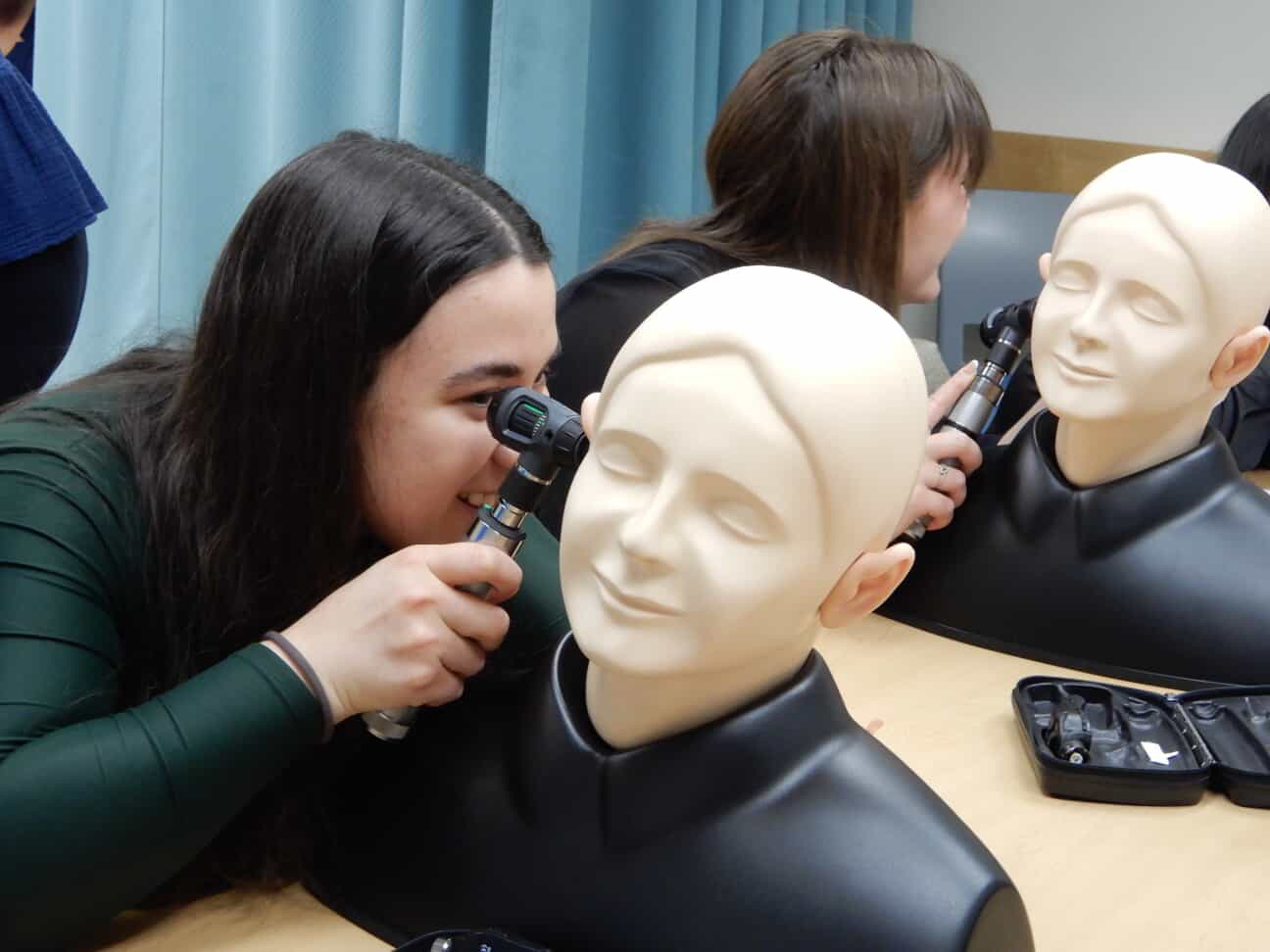
On UCF’s campus, Penso discovered that grades/lectures were only one piece of a medical school application. She needed patient care hours, not just lab reports, so she took a job at a hospital in Orlando.
“I was a full-time student, but I [worked nights] in the hospital,” Penso explains, working two twelve-hour night shifts each week as a nursing assistant and unit secretary in surgical oncology.
It exposed her to the surgical side of cancer, involving tumor removals and preoperative and postoperative care.
On hospital grounds, Penso’s eyes opened to how many Venezuelan families live in Orlando. She found herself translating again, this time not as a child but as a hospital employee, bridging the gap between Spanish-speaking patients with English-speaking surgeons and nurses.
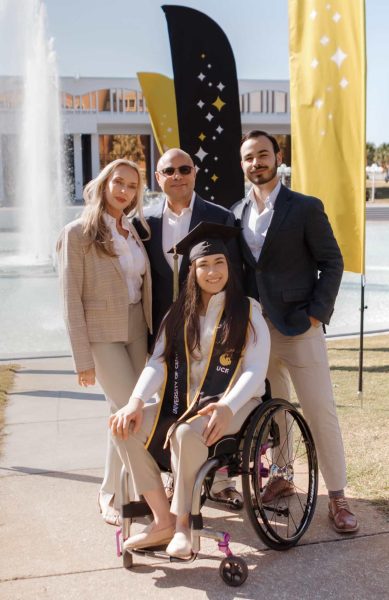
“It was a full circle moment for me,” she says, “because I was also there once, and now I was the one translating for them.”
One of her colleagues from that unit later introduced her to a new opportunity. The colleague, a student at the University of Florida (UF), was helping with a project to expand telehealth in a remote Colombian town.
She asked if Penso was interested, and soon, Penso was attending Zoom meetings with faculty from UF, local health officials in Colombia, and physicians. The group aims to design something that lets residents find a way to see doctors remotely, regardless of if they lack digital literacy.
Right now, the program designs shorter distances for local patients to receive help logging into virtual appointments. Staff at those centers assist with the calls, while physicians connect from larger hospitals.
Penso learned everything she knows about health in English but now finds herself flipping between the two languages, matching a term she memorized in Orlando to a word that makes sense in Latin American Spanish.
When her lease in Orlando ended, Penso moved back home to South Florida, taking the next step in her education—enrolled at Florida International University’s Herbert Wertheim College of Medicine.
Right now she is completing a graduate certificate in biomedical and molecular sciences. When she passes, she plans to start FIU’s medical program next August.
“I like to learn,” she says. “I do not think I would have chosen such a long career if I did not enjoy learning.”
Outside of class, she continues learning, but the research is self-conducted. CP requires neurological physical therapy that focuses on building new connections in the brain. During sessions, her physical therapist sometimes presses on certain muscles to help them “wake up,” then teaches her how to move in a way that makes the signal stronger.
Since she knows what it feels like from the inside, she often instructs other patients to do the same. “What worked for me, I try to move it forward,” she says, hoping her experience can offer someone else a starting point.
Penso hopes to be involved in neurological research and in very practical support for people with mobility needs. She knows that for many, the world is not built with their bodies in mind, yet small changes can open it up.
When semesters get hard, she looks back at those steps and reminds herself how far she has already come. “Sometimes you need motivation, and you remember why you chose this,” she says.
“If I have come this far, then it is just part of the process.”
With her work cut out for her, Penso still desires to “pass health forward.” One day, when a patient sits in front of her, she hopes to be the kind of doctor who remembers exactly what it felt like to be on the other side of the conversation.