































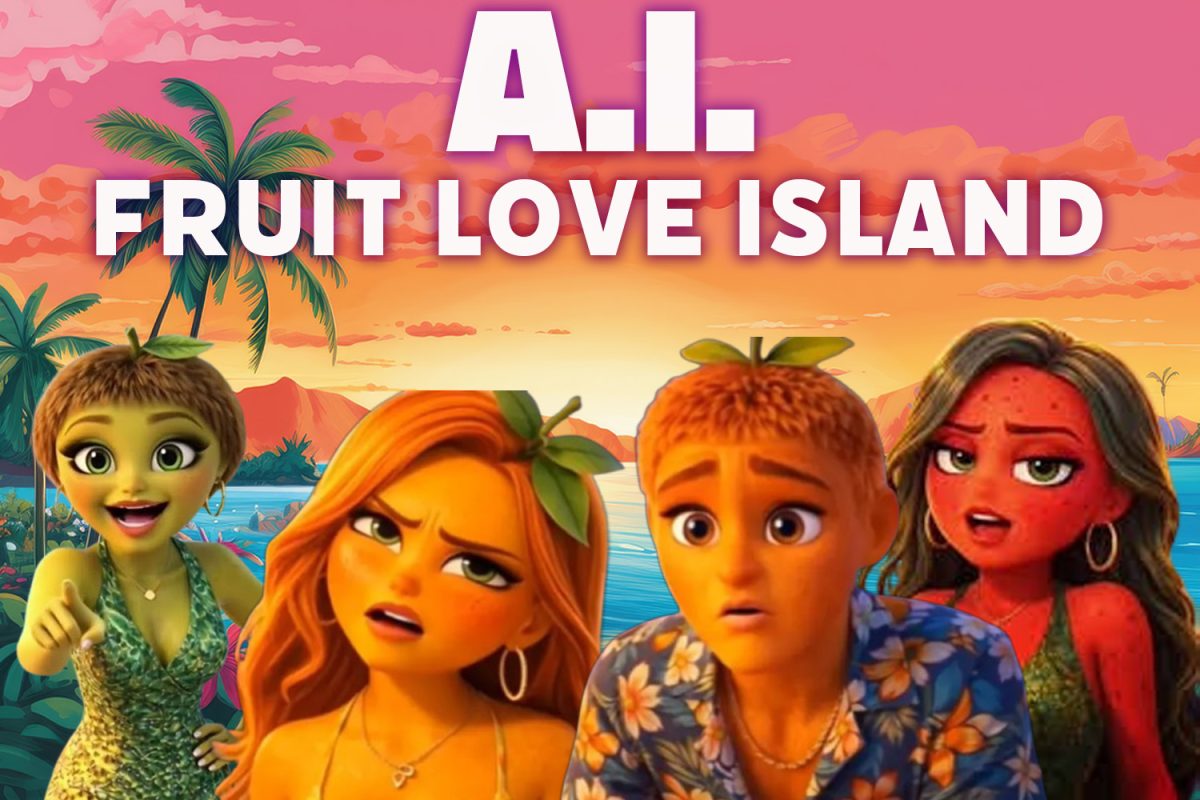
“How could you!” screams a surrealistic image of a humanoid strawberry, addressing a homewrecking banana man in a tuxedo. This plotline of betrayal repeats in every video, with a different pair of AI-generated fruit every time.
It all started on Feb. 28, 2026, when TikToker @trombonechef posted an Al video about a strawberry who cheats on her strawberry husband with her eggplant boss. Within two weeks, the post gained over 2.9 million views, sparking weeks’ worth of fruit drama.
This fruitful viewership motivated another TikTok account, @ai.cinema021, to start a reality-TV-inspired series called “Fruit Love Island.” It mirrors the plot of the original American show, but translated through angry produce.
Fans and haters alike have noticed the sharp similarities between season seven of Love Island and the recent adaptation. In one particular instance, a character by the name of ‘Cherrita’ took the role of Huda Mustafa, mentioning her younger daughter many times throughout the earlier episodes.
“Caught that Huda reference way too quick,” comments TikTok user @zay.mikelle14 on episode five of ‘Fruit Love Island.’
But that isn’t all; fans have also noticed similarities between the characters’ names, such as ‘Anaya Papaya,’ a close nickname to ‘Amaya Papaya’ (otherwise known as season seven player, Amaya Espinal).
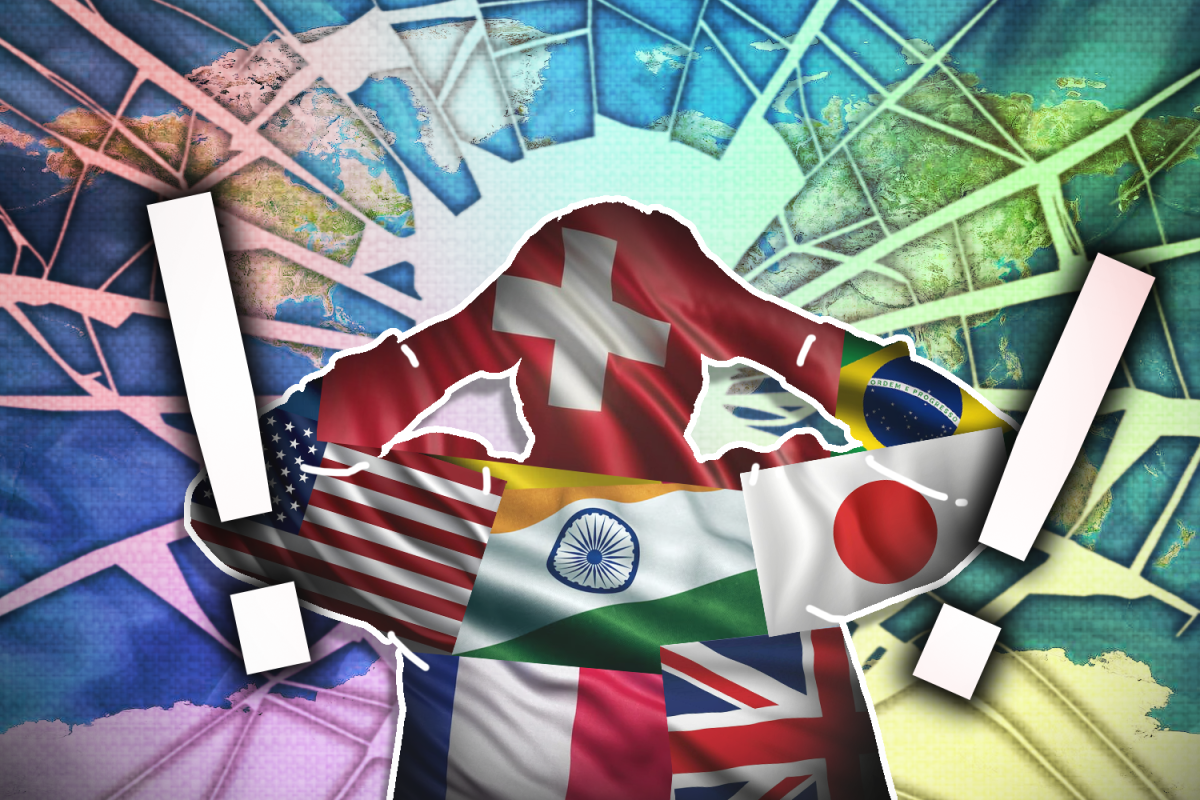
Beyond the silly play-on-names and character antics, many viewers are torn between whether such accounts should continue producing content or cease to exist, as Artificial Intelligence (AI) has grown notorious for draining freshwater resources.
According to the Environmental and Energy Study Institute (EESI), “Large data centers [much like what accounts like AI cinema use to generate content] can consume up to 5 million gallons [of water] per day—equivalent to the water use of a town populated by 10,000 to 50,000 people.”
Junior Sophia Degand shares her thoughts: “I think the creation of so much AI content demotivates people to make content for themselves. It creates a mindset of ‘Why put in hours of work when I can just ask an AI bot to do it and get the same, if not more views/likes for it.’”
She continues to note how trend lengths have decreased. “Most memes or viral moments only have the spotlight for less than a month before social media platforms start pushing the ‘next best thing.’” She continues, “I think AI ‘Fruit Island’ is having its 15 minutes of fame because of its flashy visuals, crazy plots, and audience interaction.” Degand establishes.
High schoolers like Degand aren’t the only people to notice changes in algorithm and content preferences. 8th-grader Austin Garcia also noted the constant engagement affecting viewership.
“Love Island is a popular show, and AI is on the rise, so those two things together would create something that people want to watch,” says Garcia.
Garcia has not watched much of the show, but has a favorite character. “Probably out of all the guys, [I like] Bananito.”
As of a week ago, the account released its finale but continues to post fan-centered content, such as a recent Volleyball episode. Among the haste in content release, there is editing in place that is required to keep it engaging, like seamlessly conjoining each generated clip together.
Whether this trend fades as quickly as it started, or permanently leaves a mark on the algorithm forever, one thing is clear: audiences are watching and questioning ethics now more than ever before.