








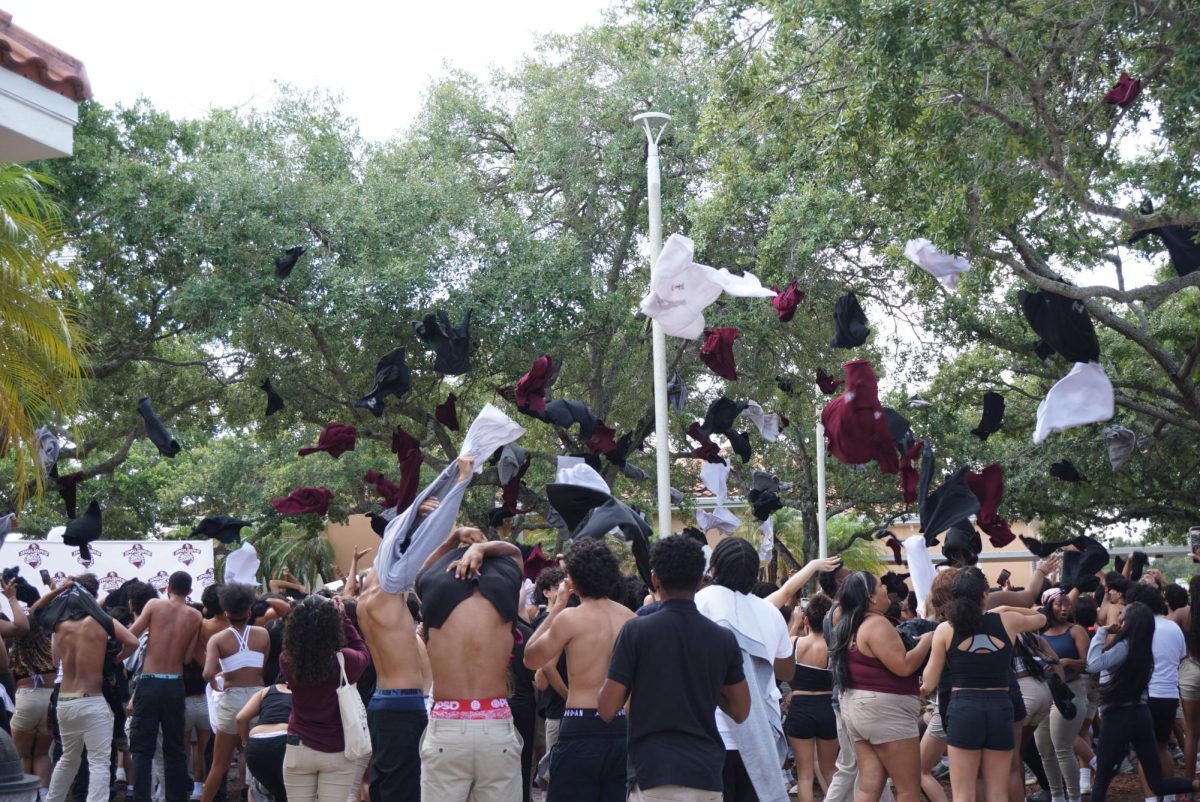





















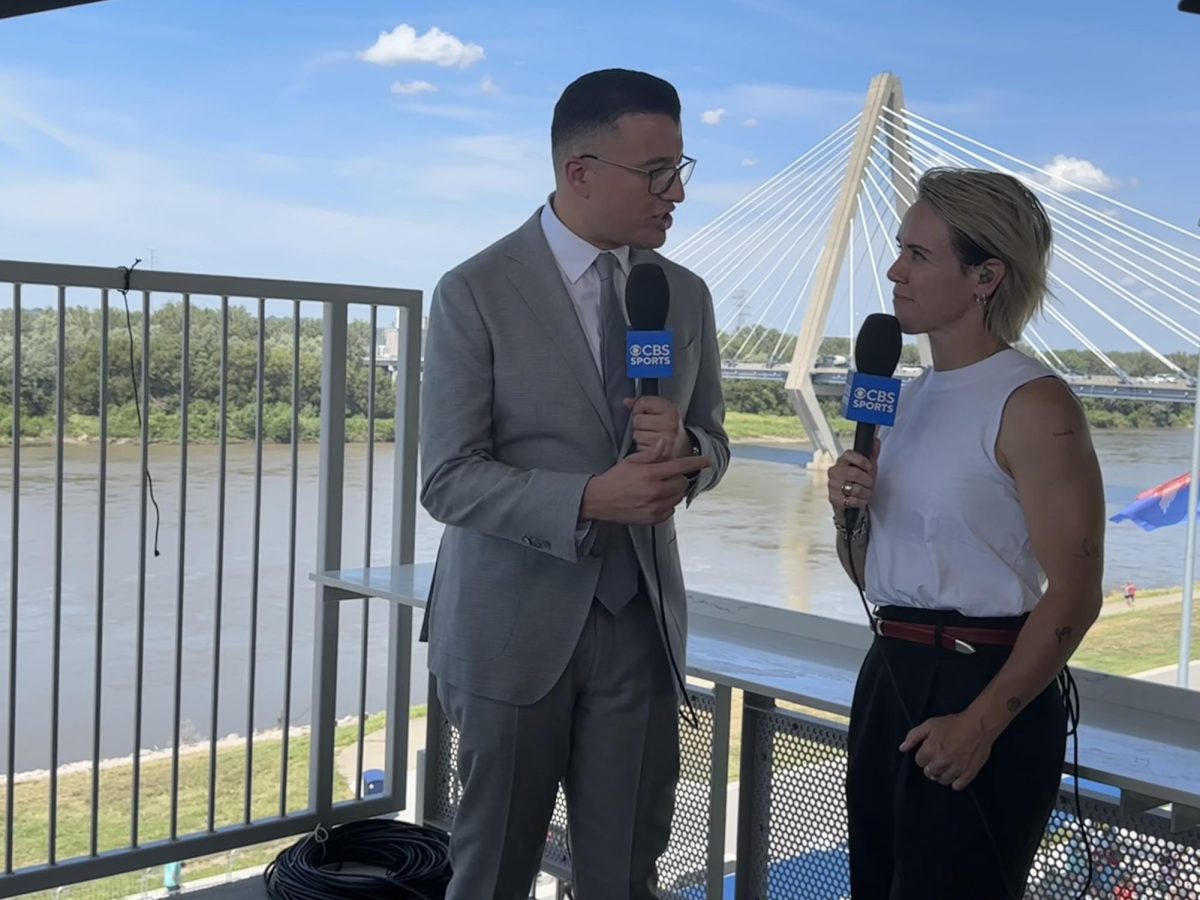
Debating nonsense with his friends in the breezeway at 9:45 in the morning, Chris Wittyngham was like any of his other peers in high school. Little did he know, he was already training for the job he would spend the rest of his life chasing.
Wittyngham is a South Florida native who currently calls matches for MLS Season Pass on Apple TV, does commentary for CBS Sports on the UEFA Champions League, and Italy’s Serie A. He stands as one of the most respected rising voices in American soccer. Fans online call him “the best American soccer broadcaster working today”; many say there is no close second.
However, long before he was in Italy to call matches and sit on studio panels next to Jamie Carragher and Thierry Henry, he was a Pembroke Pines Charter High School student with a clear goal and curiosity for the voice behind the game.
His curiosity led him to discover commentary. While watching football, Wittyngham realized a way to enjoy sports without playing them: broadcasting. “I always wanted to do it,” he explains. “I was a terrible athlete, so you sort of wonder, what is my way into this thing that I like?”
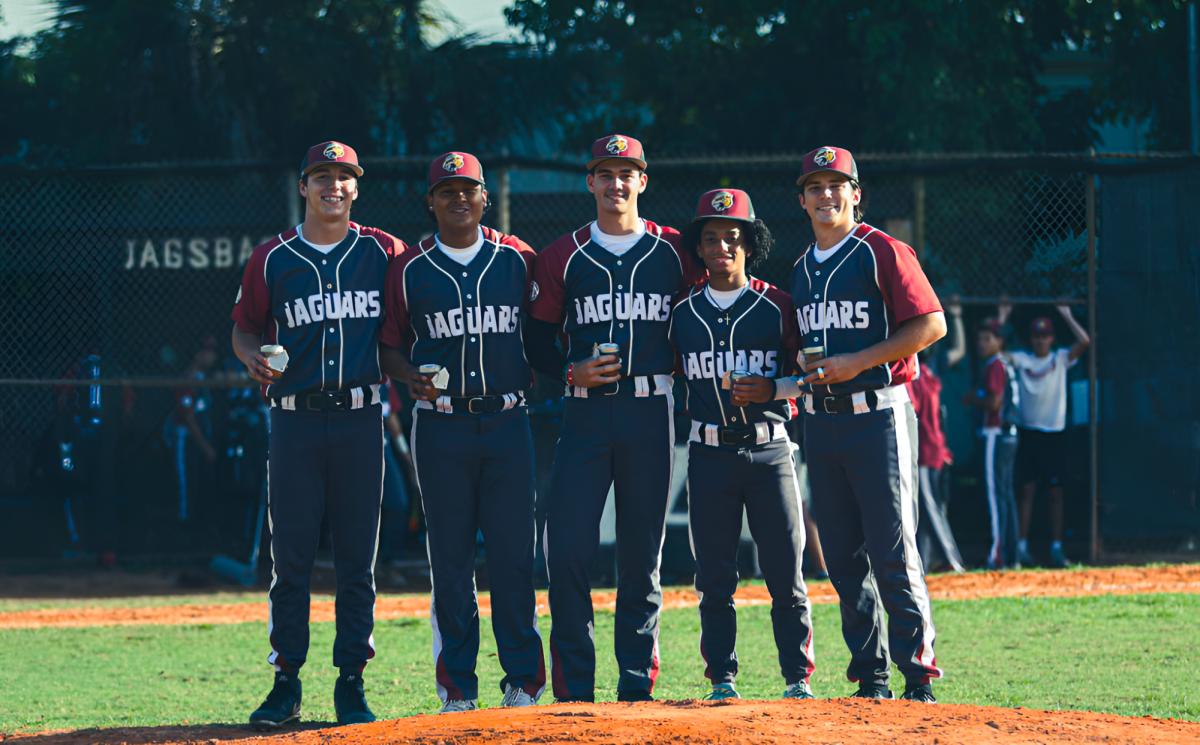
From that point forward, everything he did at Charter was intentional. He joined the morning announcements, served as the PA announcer for the baseball team, and reported on high school sports for a paid-programming radio show. He also took part in Charter’s former TV Production class, taught by Mr. Simon, where he practiced early skills that would later shape his broadcasting foundation.
“Everything [through] high school was about figuring out paths, avenues, and who I had to meet,” Wittyngham recalls.
When it comes to what he remembers most from his time at Charter, it was not a specific class or award. Instead, it was the one daily ritual of “ being at lunch with [his] friends,” he says. “Just sitting around in the breezeway talking about nonsense.”
At the time, those conversations may have felt insignificant. Only later did it become clear that those moments taught him timing, connection, and ease around people–lessons that would resurface in a broadcast booth years later.
When describing the work of sports commentary, he connects it directly back to school. “Calling games is like an open-book test,” he notes. “You prepare all this information, you study the players and teams, but you still do not know what is going to happen.”
The habits he built at Charter, preparation and organization, are the same ones he relies on today. Now, his exam happens to be broadcasting on national television.
Most alumni credit a teacher or a family member for their first career breakthrough. However, Wittyngham’s big break came from a radio show.
Back in high school, he religiously listened to a daily sports talk program. He often emailed them, submitting stats or thoughts which they would read on air. One day, after hearing another one of his emails read on air, his parents encouraged him to take a chance.
“Why not ask them for a job?” they suggest. So, he did. “I emailed them, asked for a job, and they gave me one,” he says.
That internship would come to be the first domino of his career. It set off a chain that moved him through the University of Miami, into Inter Miami’s booth, onto the desks at Univision, and eventually into MLS Season Pass and CBS Sports.
His proudest early moment came with Inter Miami, calling just the club’s second match in franchise history and later serving as the team’s radio announcer for three seasons. Since then, his career has expanded onto a much larger stage, with Wittyngham now working in CBS Sports’ soccer department and calling major international competitions, including live Serie A matches in Italy and UEFA Champions League semifinals.
One memory, however, stands above all others: the Champions League semifinal between Inter and Barcelona that ended with a seven-goal aggregate.
“It was probably the most breathless and entertaining series of games I have ever called,” he reflects. “It might be the best I will ever call in my life.”
It was also the final match of legendary broadcaster Ray Hudson’s career, and Wittyngham had the honor of sitting beside him for his sign-off.
“He was such a character and such a wonderful person,” he expresses. “I am incredibly lucky that I got to be the one calling his last game.”
His style today is shaped by three cultures at once. He blends American structure, European vocabulary, and Latin American energy. His voice is calm but energetic, a mix that reflects the cultures that shaped him.
“Latin American broadcasts are full of energy,” he explains. “I do not emulate the style completely, but I always try to bring that energy to what I do.”
Growing up in Miami influenced him just as strongly. Wittyngham claims that “you cannot grow up in Miami and not understand what a game like El Clásico means…that culture definitely influenced me.”
Despite everything he has achieved, he approaches the future with humility.
“If you would have asked me five or ten years ago, I would have given such a wrong answer,” he admits. “I really enjoy what I do now, but I have no idea where it goes next.”
He hopes for bigger matches, bigger tournaments, and maybe one day, a World Cup assignment.
For now, his motivation remains simple. “I do not really stop in terms of wanting to improve,” he says. “I have always wanted to do this, and it is everything I ever wanted it to be.”
No matter how far his voice travels, Wittyngham still carries the same excitement he had in the breezeway at 9:45 in the morning.
Luz Maria Wittyngham • Jan 14, 2026 at 10:35 AM
Congrats to all of the students that put together this amazing article!
This article was so well written! The CHAT has always been one of my favorites to read.