


“Where words fail, music speaks”, a quote by Danish author Hans Christian Andersen, highlights the way music can convey feelings beyond words and how music can create comfort in such a way that it’s unlike anything else. An act as an anchor from everything wrong in this world. Music, in a general sense, has an impact on just about everyone. It resonates with people emotionally, and no matter who you ask, a relationship with music will always be found.
Rock, hip-hop, jazz, country, and R&B are all different genres of music, and just a few out of thousands of other genres. Genres have always been a clear-cut indicator of someone’s personality, values, and even factors such as upbringing. A student who loves rock music might be creative, jazz fans are believed to be easy-going, and those who enjoy pop are likely extroverted.
Besides the simple fact that students are aware of what they enjoy listening to, there is an exact science behind it. When listening to music, it lights up the entire brain, precisely the hippocampus and amygdala in the temporal area. The area of the brain responsible for the limbic system, which allows pleasure, motor function, and powerful emotional response.
This is also why listening to eerie or intense music might make you feel uncomfortable, and when you listen to music you prefer, dopamine is released, a feel-good transmitter, that makes music ever so enjoyable.
Due to this, it’s evident that music is vital for students. From lullabies to attending concerts, exposure to music fosters a profound and complex connection that can serve as a tool for coping mechanisms, establishing a sense of identity, and promoting cognitive development.
It’s almost certain that when walking through the halls of school, students will be wearing headphones during passing periods, listening to music from various genres and artists.
Freshman Ayanna Ottley has built her whole life around music; she sings, plays multiple instruments, and is part of the band called Lake House.
“Music acts as a sense of relief, the first thing I always turn to, no matter what.” Ottley declares,
“I know it will never leave my life; it’s such a huge part of my life. If I were to quit, there would be a piece of me missing.”
William E. Fredrickson works at the Florida State University (FSU) as a professor of music education. With extensive experience as a music teacher for 40 years, Fredrickson believes that surrounding students with music can be incredibly beneficial for students.
“Listening to music can be very useful for either relaxing or paying attention. Listening to music while exercising, or even studying, can help some students focus on their task and make it easier to engage in the task for a longer period of time.” Fredrickson explains.
As Fredrickson has stated, music offers exceptional benefits by reducing stress, improving concentration, and blocking out unwanted distractions. But, despite all of these benefits, not all relationships are necessarily good ones.
This might happen when students listen to music too depressing, or that fosters a harmful rather than beneficial relationship with music.

(Donated by: Ayanna Ottley)
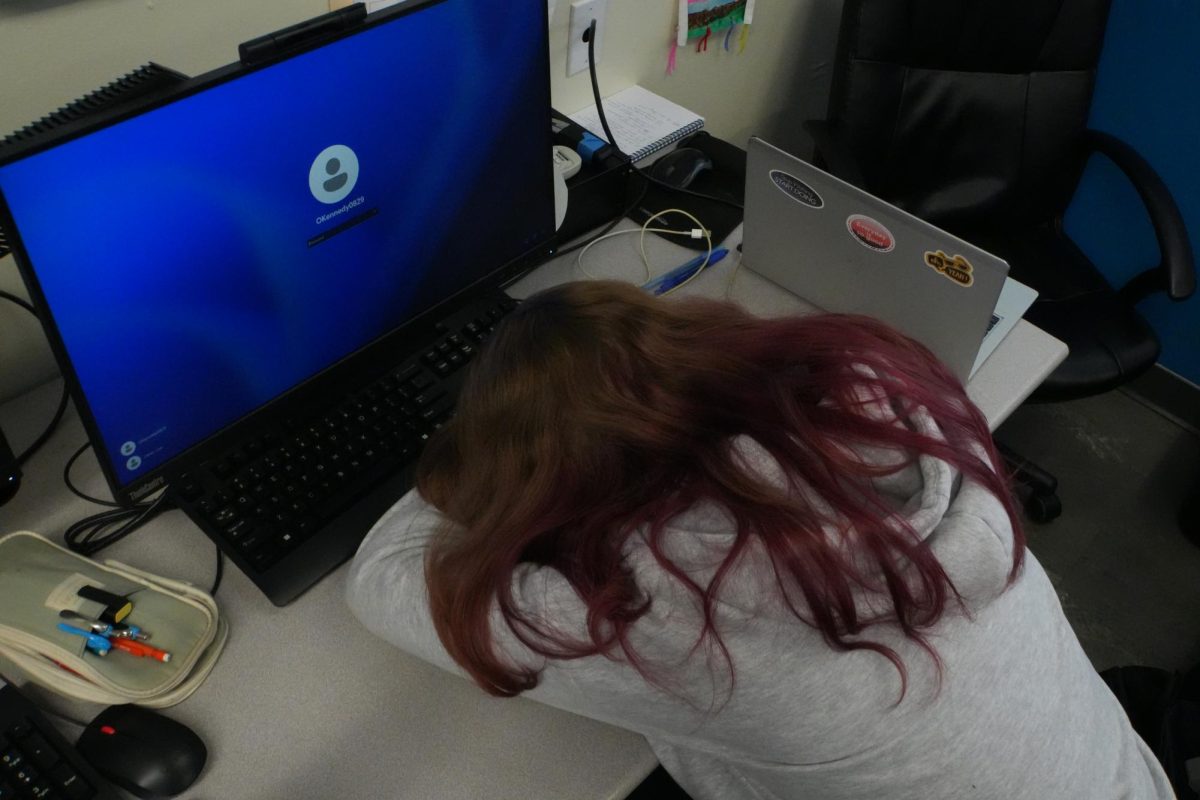
Where this stems from is that there’s a negative correlation with music, such as trauma or bad memories, overexposure to music, making music feel exhausting to listen to, or simply too loud to handle. For students, specifically student musicians, a poor connection to music can lead to many factors.
Students who play instruments can find themselves feeling overwhelmed, too much pressure placed on them, or a fear of competition that leads to burnout.
This, as a result, makes playing feel like a chore instead of feeling passion, often leaving students to abandon their instrument completely.
Sophomore Amaya Richards-Walton has been playing the trombone since the 6th grade for the band, and despite loving her instrument, she expresses the desire to quit by next year.
“I just find myself not enjoying it as much anymore, it’s hard to explain.” Walton tries to explain, “Everyone does this competitively, and I rather just play it for fun.”
With the much pressure from many student musicians, it brings up an important topic of music therapy.
Though more commonly used on adults and medical patients suffering from Dementia or Alzheimer’s, music therapy is essentially the use of music to create a therapeutic relationship and can be used for students of all ages, and is highly effective.
It improves emotional regulation, reduces anxiety, and creates a safe space for another way to communicate. It inherently allows students to build a healthier relationship with music that they can always come back to when stressful situations might arise.
Student Carla Duran always plays music to soothe herself down,” Whenever I’m stressed, I either listen to music or play it, it always works.”
Music will always hold a place in not only students’ lives, but also, surpassing that, from infancy through adulthood to old age. Music has an impact on each and every life; it transcends beyond just melodies and rhythm, but is a complicated relationship that can frighten you, excite you, or give you strength. It isn’t just noise but a language on its own.
More about music:
=