


Laughter, chatter, and the smell of food waft through the air. Everyone is busy at work, eagerly digging into their plates full of the traditional Serbian dish, Sarma, containing cabbage, minced meat, and rice. Conversations overlap at the dinner table, shifting between English and Spanish, the curious mix of culture ever-present in the most effortless way.
The United States, famously dubbed the world’s “melting pot,” has long been a symbol of cultural mixing and expression across numerous generations. The world’s increasing interconnectivity allows for this cultural diversity not to be limited to only cities or neighborhoods, but to vary across millions of American homes. Multicultural families are beginning to dominate certain parts of this country, and their significance should not be overlooked.
It is an undisputed fact that the family one grows up with, more specifically their parents, plays a huge role in shaping who they are as people. As family dynamics begin to change and some become more common than others, whether it consists of either a single parent or even multiple parental roles, the role model position has an impact that is constant.
The cities and counties of South Florida are some of the biggest examples of cultural diversity in homes, turning daily life into an enriching and global adventure. In Miami-Dade alone, more than half the population is foreign-born, and people from Latin American and Caribbean countries shape daily life through language, food, and celebrations. This is not to say, however, that this cultural diversity is limited to those regions alone.
Cianna Tejada, a family friend and senior at George Washington University, always stands out with her Peruvian-Hungarian-Bosnian heritage. The multiethnic nature of her home is not just tolerated but also plays a meaningful role in bringing her family together.
“It’s funny, many people don’t expect this, but my dad was actually my mom’s Spanish tutor in college, which is how they met,” Tejada commented.
“My mom, a proud Hungarian-Bosnian-born woman, shocks people with her perfect Spanish to this day. It’s also what led me to be trilingual. As an adult, I can especially appreciate the adaptability and open-minded nature I got from my upbringing.”
With backgrounds like hers, it is not only two unlikely nations coming together in a home, but a complexity of language, food, and even religion. At times, it may even be confusing for a young person to deal with such contrasting traditions from each side.
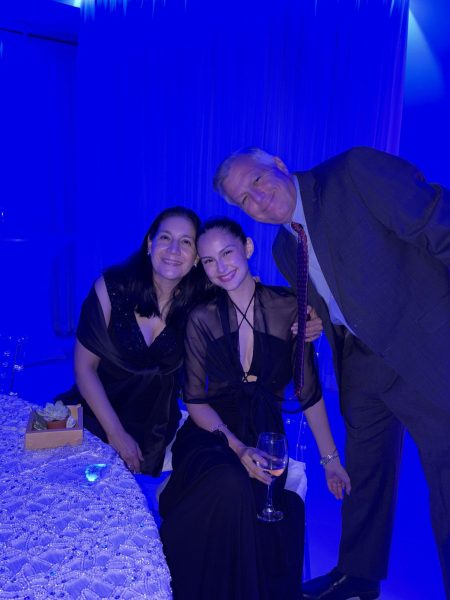
Law student and Pines Charter alumni Anne Abramovici comments, “Although I love it now, growing up, one thing that conflicted me was my religion. My dad, with Romanian-Hebrew roots, is committed to Judaism, while my mom, now converted, was always brought up as an Ecuadorian Catholic. I always had my Bubbe reading the Torah to me while my Abuelita would hand me a bible.”
To participate in and honor holidays like Hanukkah and then get together with family to celebrate Noche Buena is not easy for a kid to wrap their head around. Yes, the navigation of multiple identities can be challenging, especially in adolescence, but it can also play a key role in developing a generation full of empathy, grace, and the ability to adapt. The understanding that it is not the world’s differences that cause a divide, but instead the inability to accept and celebrate them, can change how the world treats each other.
“I’ve grown to really love all of the different traditions I’m a part of. Going to Japan for a summer and then to Jamaica the next is something I wouldn’t change for the world,” said sophomore Jade Irons.
“I have always been taught to never shy away from the blessing that is my heritage, and I definitely never will. I’m always eager to try food from a different culture or listen to songs with languages I don’t even understand.”
Unfortunately, the challenges of an interethnic childhood can at times even create invisible borders. Cultural diversity might not always seamlessly create a feeling of connectivity to one’s heritage. The geographical distance can sometimes feel as though it translates into a mental one.
It’s a difficult feeling, as if you are in two different worlds. The ability to overcome mental challenges such as these and reach true self-acceptance is something the upcoming generation really needs. Sophomore Sophia Salomon can attest to this feeling.
“Sometimes it’s hard watching people have close relationships with their cousins and even their aunts and uncles. With family scattered throughout Spain, Cuba, and Lebanon, I rarely ever see them,” Salomon commented.
“But, I will say, the feeling that I get when we are finally all together makes the time apart so worth it. It’s like we forget we are all from different parts of the world.”
As for me, to say that living in a Serbian-Honduran household has shaped who I am as a person is an understatement. Coming to terms with the fact that my grandparents can’t even understand each other is a difficult task, but the realization that, despite this, my family can still come together, share our different traditional meals, music, and stories, makes it all the more meaningful.
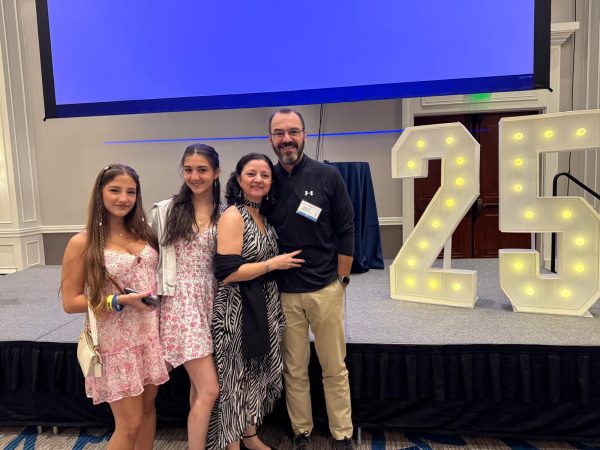
A fateful meeting at Florida Atlantic University (FAU), between a woman from La Ceiba, Honduras, and a man from Belgrade, Serbia, sparked a blending of culture, tradition, and identities that will continue to shape my family and be celebrated for generations to come.
Through this, I have had the pleasure of watching bonds emerge from unlikely relationships, giving me hope for the integration of this changing society and the power of embracing diversity.