

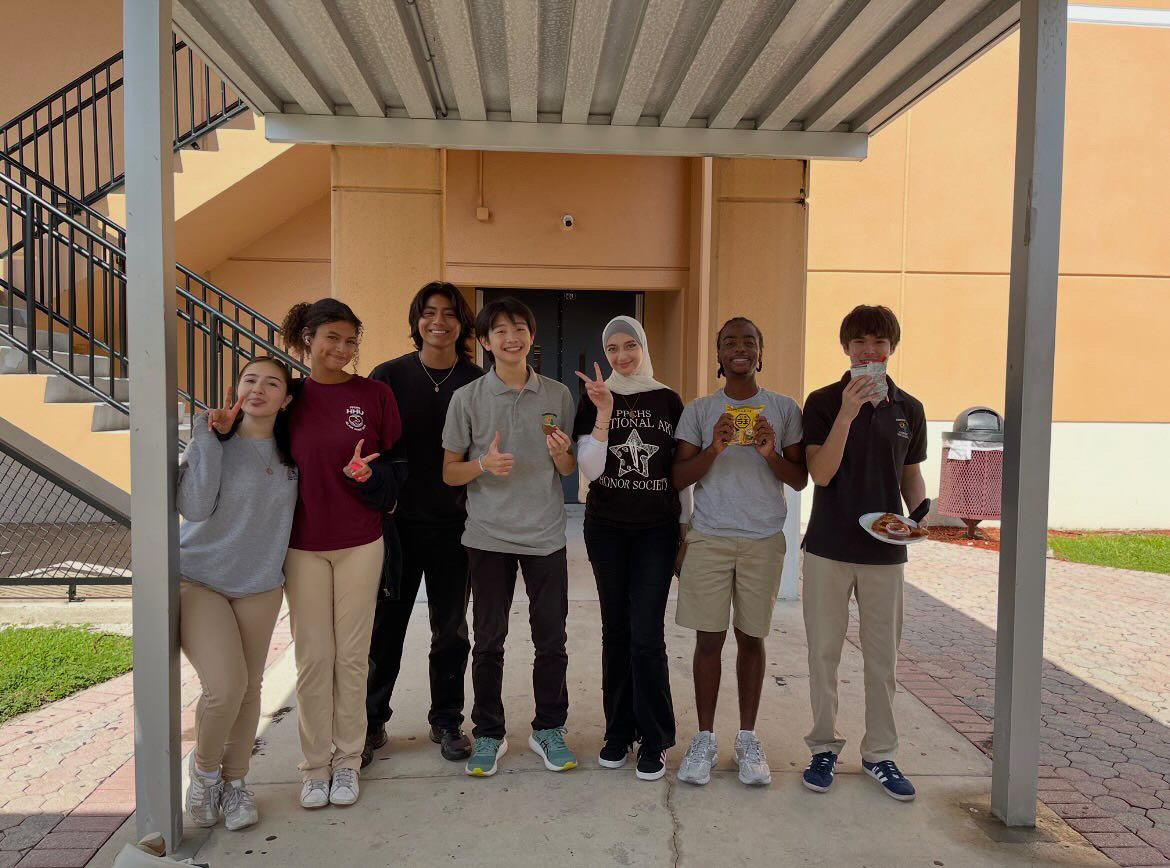
It’s not often within a school that students have time to stop their studies and think about what makes their experiences unique. There’s a cultural aspect that goes into shaping every moment of a student’s time in high school that often goes overlooked and underappreciated. The significance of school culture was brought into stark view when PPCHS received Japanese transfer student Yuki Yoshida for two weeks.
Despite the incredible multiculturalism of Charter, the school doesn’t often see foreign transfer students, especially those from East Asia. The community, even though it’s so varied in ethnicity and background, is still extremely westernized, with almost everyone acclimated to the American high school experience. Yoshida, however, brought a new perspective to the student body: schools everywhere don’t share the same values that Charter does, and those values shape nearly every aspect of a student’s life.
Yoshida could be considered a fairly average teenager in Tokyo, where he lives and attends school. In his free time, he enjoys watching soccer games and anime, things that would be pretty common even for a teenager in the USA. However, his expectations for school at Charter were flipped upside down as he was introduced to a student body very unlike that of his home country.
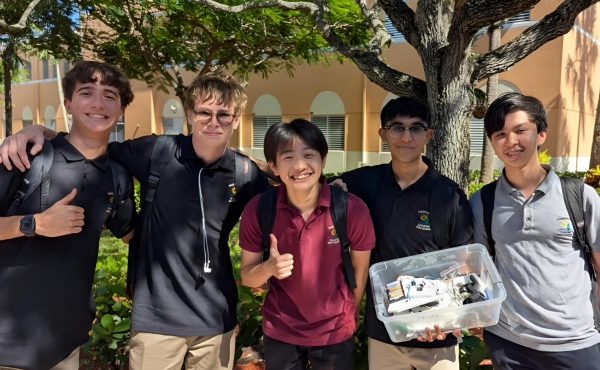
The transfer student, during the two weeks he toured the campus, stayed at the home of PPCHS junior Michael Zhuravlev, whom he’d met in Tokyo the previous summer. He attended classes alongside Zhuravlev as he became accustomed to the PPCHS community and American culture.
It was almost overnight that Yoshida became a minor celebrity on-campus, with everyone hoping to get a chance to meet the student from another country. Yoshida, however, didn’t expect this in the slightest. Contrary to the excited reception he received, he’d anticipated a much colder welcome.
“From watching American movies and TV shows, I expected there to be a lot of scary bullies,” he recounts. “So it was surprising, everyone was actually really kind.”
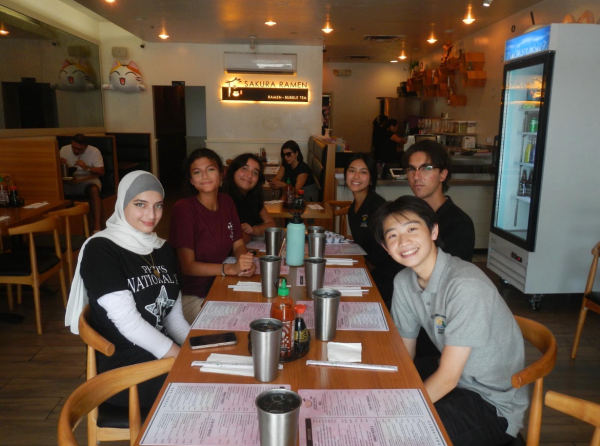
It was only a short while before groups of students began to seek out ways to include Yoshida in their activities, whether they were inviting him to play volleyball or taking him out to restaurants for dinner. It seemed that the entire school was eager to share the American high school experience with him.
Interestingly enough, Charter’s welcoming community helped Yoshida integrate with the school system quite quickly, something unusual in Eastern-to-Western transfer students. A 2013 study by the International Journal of Intercultural Relations (IJIR) reports that transfer students from Asian countries often have trouble adjusting to school in Western nations due to a dynamic called “power-distance”.
The higher the prevalence and acceptance of social hierarchies and rigidity in a society, the higher the power-distance. Competition and power-distance are things far more prevalent in collectivist societies in Asia than in the USA, making the transition for students far more difficult. Despite studies pointing to the idea that such a cross-cultural exchange would be rough, Yoshida connected with PPCHS almost immediately.
“In Japan, it’s often considered good to go along with everyone else, even if it means changing your own opinion to match the group,” remarks Yoshida. “But in American schools, people aren’t afraid to share their own opinions, and I really admired that.”
Even so, attending school in the US presented challenges for him. With the huge number of fellow students rushing to meet him, Yoshida was soon having to remember dozens of new names.
“Japanese pronunciation is very flat, so sometimes it’s hard for me to say or remember people’s names correctly,” he recalls.
In addition, since his school back home starts at 8:25, getting started for school before 7 each morning was tough for him. Nonetheless, despite beginning school early in the morning on the other side of the world, Yoshida did his best each day. By the end of his visit, he had not only made dozens of friends, but his English-speaking skills had improved noticeably, and somehow he’d managed to enjoy the school cafeteria’s lunch.
There were aspects of American schools that he wished for back in his home country, especially the elective system.
“The biggest difference was how free and flexible the school rules were,” he recounts. “At my school in Japan, once you choose your subjects, you can’t change them until you graduate. It’s really hard if you pick a class you’ve never taken before and then realize it doesn’t suit you.”
Later on in his trip, both his parents and younger brother, Joy, would come visit as well, with Joy even touring the school as well. On his last day in the States, Yoshida brought gifts and snacks for his American classmates before bidding farewell to them.
The thing was, Yoshida and his family enjoyed Florida a lot more than expected, especially the more urban areas in downtown Miami and the beaches. His family even decided to bring him back to Florida over winter break a second time for his birthday. Hearing that he’d be back in town, his friends at PPCHS organized a birthday party for him, getting him a cake and buying him gifts.
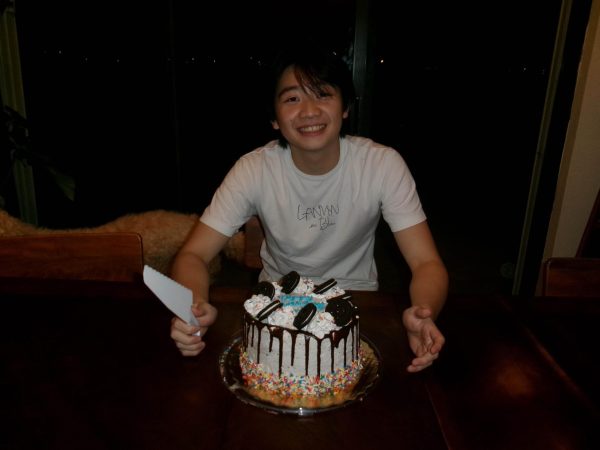
“I felt really welcomed. I thought I would [be] sitting on the side by myself, so I was really happy that everyone talked to me.”
Perhaps the reason that PPCHS created such a welcoming atmosphere for Yoshida was because of its strength in diversity. A 2021 study published in the National Library of Medicine finds that school groups with a plurality of ethnic backgrounds are far more welcoming towards those from other countries than those with more homogeneous populations. PPCHS is an outlier among American schools in the fact that it has an 84% minority enrollment rate, which could explain why Yoshida’s positive experience defied the predictions of the IJIR report.
Yuki Yoshida’s two-week visit to Charter may have been short, but it reveals both the significance of the school culture that students so often overlook and the strength of PPCHS’s unique multicultural environment.