

A student’s life tends to get busy; balancing a social life, extracurriculars, and school work can be difficult for most to do on their own. With stresses such as these taking a toll on many adolescents, it has become harder to get proper amounts of sleep at night or get through daily tasks without a little extra help, even if that extra help comes with a cost.
Many students have turned to caffeine consumption through coffee and energy drinks to give them enough fuel to get through the school day, improve focus, alertness, and for an extra jump start to their morning.
“I need to stay up longer to do school work because I have extracurriculars after school, so energy drinks and straight caffeine [are] definitely helpful,” comments sophomore Caressa Birks. “Coffee makes me feel more awake, but my brain functions better with it, making schoolwork way easier to do well into 1 and 2 a.m.”
While creating many benefits for students, caffeine also comes with emotional side effects such as anxious, behavioral, and medical effects such as increased heart rate and elevated blood pressure.
A study conducted by the National Institutes of Health (NIH) found that common side effects of caffeine consumption among teenagers were insomnia, vomiting, hallucinations, and even aggression
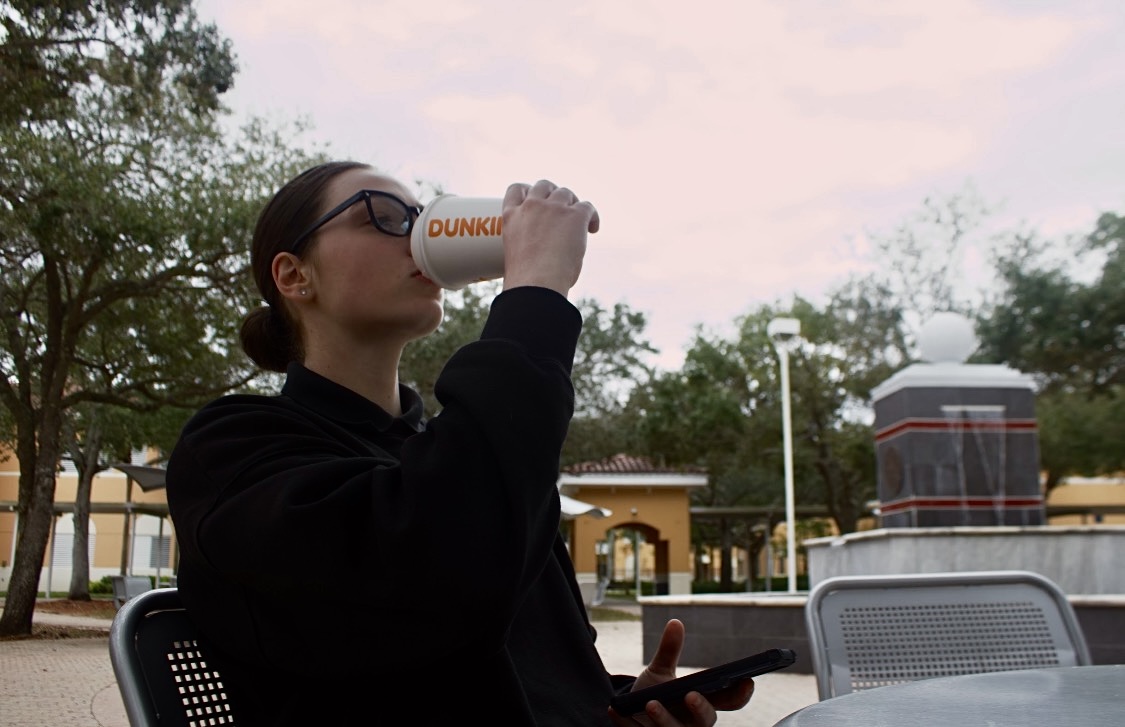
This increase in popularity further promotes well known coffee shops, giving them a chance to expand farther and farther across cities and neighborhoods. In fact, a Dunkin Donuts is located directly across the street from Pines Charter, making it so some students can’t help but to give into the urge.
“I’ve gotten into such a habit of drinking caffeine consistently and embedding it into my daily routine that, at this point, it’s extremely difficult to create newer, healthier habits,” says Birks.
The amount of caffeine teens are drinking on a regular basis causes irregular sleep patterns and boosts in energy levels when unneeded, such as late at night when teens should be asleep. This has caused many students to result in the use of melatonin to combat the effects of caffeine.
A report done by the Center of Disease Control and Prevention (CDC) showed that in a 10 year span from 2012 to the end of 2022, melatonin usage among adolescents had increased by 530%, with the ingestions reported to poison control centers skyrocketing from roughly 8,000 cases to nearly 53,000.
Freshman Analia Chery remarks, “Last school year I used to drink energy drinks to get me through the school day, specifically Alani’s, which are high in caffeine. This would cause me to have energy throughout the day, but also at times when I didn’t need it, like when I should be sleeping, causing me to use melatonin some nights to get good sleep.”
Caffeine and melatonin can be made very crucial and significant elements in the life of a teen, however it is important not to rely on these things in order to power through the day. There’s nothing wrong with a teen wanting to treat themself to a cappuccino or a can of soda, but it’s very important that teens acknowledge the fine line between indulging and addiction.