


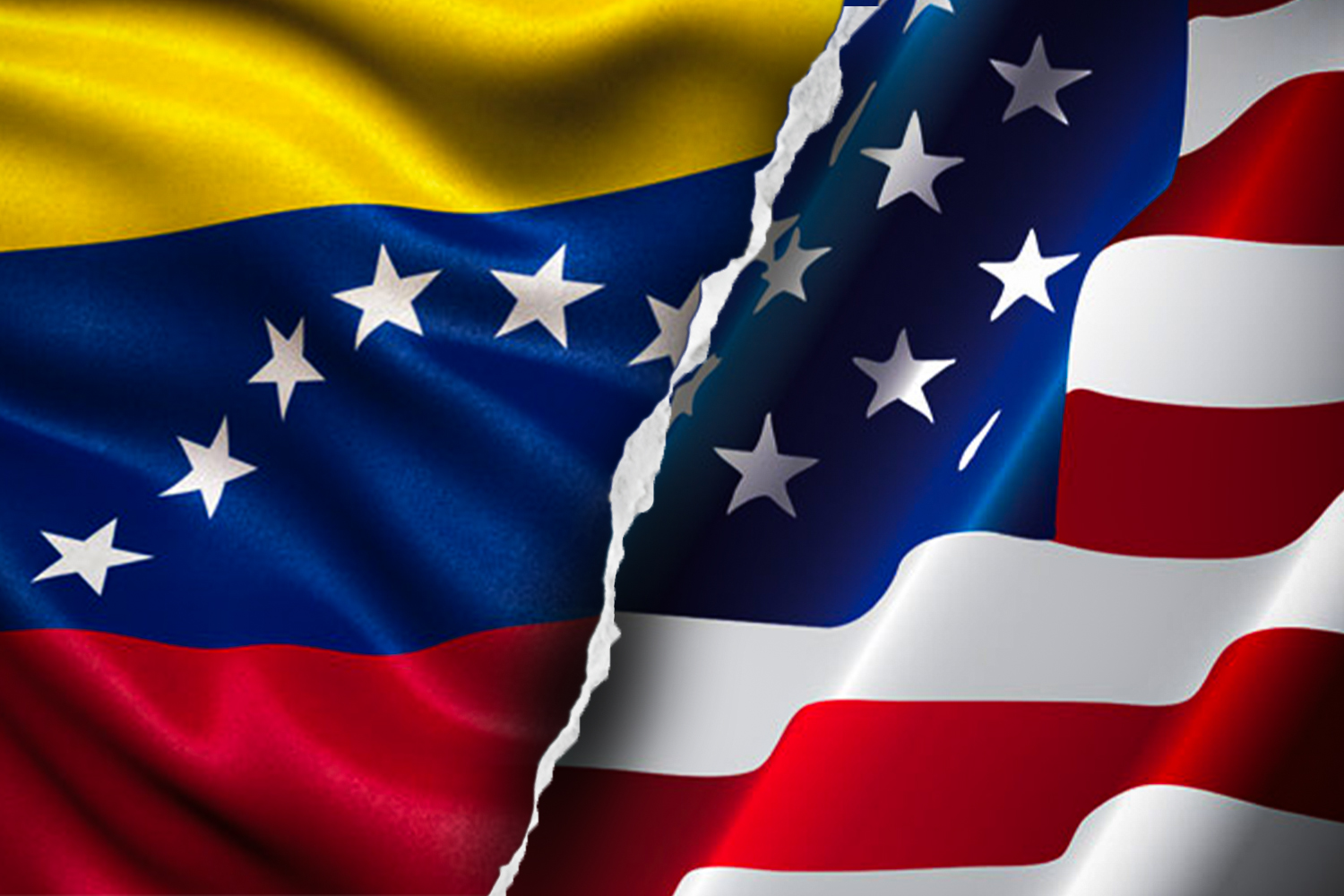
On Jan. 3, the United States military, under the command of President Donald Trump, carried out a large-scale strike on Venezuela’s capital of Caracas, capturing its president, Nicolas Maduro. The capture marked a historic day for Venezuela, which had been under Maduro’s brutal regime since 2013.
The strike, dubbed “Operation Absolute Resolve,” took place early in the morning on the third, when over 150 aircraft attacked the capital. Bombers struck infrastructure across the city as a team entered Maduro’s personal compound, capturing the president and his wife, Cilia Flores. The two were flown to the Wasp-class amphibious assault ship USS Iwo Jima and then transported to New York City. Estimates from various world governments place the death toll of the attack at 75, including several civilians.
Maduro’s capture had thousands of Venezuelans and Venezuelan expatriates taking to the streets in celebration of freedom for their country, both from the dictator’s iron fist and from the economic havoc that his administration has inflicted on the impoverished nation.
Many hope that the country can recover after its administration’s corruption led to a poverty rate of over 90% and inflation soaring over 80%, which rendered the Venezuelan currency, the bolivar, nearly worthless.
Unfortunately, while the removal of Maduro brings hope to many, Venezuela’s future is still extremely uncertain. As of right now, several weeks later, there’s been no real change in Venezuela’s economy or its government. The president’s capture only removed a single man, leaving the rest of his equally corrupt administration in power, which brings into question what the intent of the operation was in the first place.
Many speculate that US intervention had little to do with actually helping the Venezuelan people and more to do with the seizure of high-quality petroleum. Venezuela is the world’s richest nation in oil reserves by an enormous margin.
Historically, Venezuela refused to trade oil with the US, causing the US to place retaliatory embargos on it, further plunging the already economically crippled country deeper into devastation. Maduro’s mismanagement of oil deeply interfered with the country’s primary source of income, cutting the number of barrels of oil produced to nearly a third of what it had originally been.
However, now, it seems, the U.S government has set its sights on Venezuela’s reserves once again, with Trump actively advocating for U.S. seizure of Venezuelan oil as a form of “payback.”
Just before declaring himself “Acting President of Venezuela” on social media, Trump stated that the U.S would temporarily run the country until it could facilitate a peaceful and democratic transition of power, which left many Venezuelans hopeful for a new chance at a government that actually cared for its people.
Despite this, U.S forces exited the country, leaving Maduro’s Vice President Delcy Rodríguez in control. While the Trump Administration maintains that the U.S still has control over the country, it appears that the former authoritarian regime is being allowed to persist.
The government is currently in a “transitional state” to a liberalized democracy, which marks a promising new start for the country and its inhabitants. Regardless, nearly no political prisoners have been released since Maduro’s removal, and the liberalization of the economy seems to be mostly on paper.
However, the U.S military didn’t pull out of one key area. Fleets of American warships still hold control over Venezuela’s oil shipping routes in the Caribbean, with blockades moving oil tankers to locations that fit American interests. In addition, Venezuelan legislators approved U.S control of Venezuelan oil reserves.
For many in Europe and America, though, the most worrying part of the operation was the alarming continuation of American intervention in foreign affairs. Trump’s strike not only didn’t include consent from Congress, but it borders on unconstitutionality and violates international law.
Regardless of whether or not the removal of Maduro will help the Venezuelan people, dozens of international laws were broken in the attack, raising concerns among the rest of the international community.
Shortly after, it seems, the Trump administration was emboldened by the success of the strike, threatening to also invade Mexico, Cuba, Colombia, and fellow NATO member Greenland. The actions of the U.S in Venezuela may have only been directed at one country, but the ripple effect of the strike has been felt across the whole world, shifting global power structures, not only increasing America’s reach in the western hemisphere but further alienating it from its European allies.
Precedents show that American regime changes have typically resulted in catastrophic damage to the host countries involved.
In 1953, the USA overthrew the Prime Minister of Iran after his government nationalized oil production, similarly to the current situation in Venezuela. Unfortunately, the new Shah, who took charge afterwards, backed by the USA, began a harsh authoritarian regime, leading to countless deaths.
The same happened in Guatemala, where the U.S overthrew another socialist leader in 1954, leading to 200,000 deaths, a military dictatorship, and a 36-year civil war. In 2003, the American overthrow of Saddam Hussein in 2003 directly caused a civil war that persists to this day and led to the rise of ISIS.
There are dozens of instances in which the American overthrow of foreign nations’ leaders led to nothing but harm for the country. Usually, the intent was never to free the nation in the first place, but rather to place a figurehead leader who would put American resource interests first.
Still, there could be hope for Venezuela. Two nations, Panama in 1989 and Grenada in 1983, had positive outcomes, with democratic governments established post-dictatorship. As a nation that’s suffered for the past few decades under brutal government rule and felt the effects of total economic instability, the people of Venezuela have hope for a brighter future.




Jeissy Carrero • Feb 6, 2026 at 8:14 AM
As a Venezuelan, I want to thank you sincerely for taking an interest in what is happening in my country. It means a great deal when someone from another nation seeks to understand the struggles we’ve lived through; especially something as complex as our recent history and the removal of Nicolás Maduro from power earlier this year.
For many Venezuelans, the past two decades have been marked by deep hardship. Despite having the largest proven oil reserves in the world, our economy collapsed under mismanagement and corruption, leading to extreme poverty, shortages of food and medicine, and hyperinflation that made everyday life a struggle. Millions of Venezuelans were forced to leave their homes in search of safety and opportunity, and many lost their lives trying to reach other countries for a better future.
Under the Maduro government, basic freedoms were often suppressed, critical information was tightly controlled, and thousands of political opponents, activists, journalists, and everyday citizens were jailed or disappeared for speaking out. Many of these political prisoners have been released in recent weeks following political changes, and families are beginning to reunite after years of pain.
I also want to express my heartfelt thankfulness for the efforts of the United States government and others who have worked toward bringing hope and a path forward for Venezuela. I pray that the plans they’ve helped support to restore stability, rebuild our institutions, and move toward democratic governance can be accomplished. I know that some of these plans face opposition and conflicting interests, even within the U.S., and that history teaches us the road ahead will be difficult. I truly believe that the lessons learned from past experiences, including mistakes made in other countries, have shaped this moment and can help ensure a different outcome this time.
It’s true that changes on the political stage raise hard questions about what comes next, and it’s wise to consider both hope and uncertainty in these moments. For many of us who have lived this reality, your effort to approach it with care and perspective is deeply appreciated. Venezuela’s future will take time to rebuild, and the wounds as well as the strength of our people are still very present.
Thank you for caring and for helping others see beyond the headlines!